
Sometimes people want the natural look and feel of a cotton garment. And sometimes people want their garment to go a step or two further. That’s when performance cotton comes into play. More brands are recognizing what cotton can do, with technologies that are creating smart and functional fabrics.
Engineered to Perform
When Gary Lenett, founder of Vancouver-based Duer, the performance apparel brand, wanted to ride his bike to work but still look polished for a board meeting, he realized nothing in his wardrobe could handle both portions of his day.
“So, I built it. That’s the genesis of Performance Denim,” Lenett told the Lifestyle Monitor™ in an interview. He said the same philosophy runs across the whole line, including a cotton adventure pant and cotton stretch canvas. “These aren’t outdoor pieces that happen to look okay at a desk. They’re aesthetically beautiful, contemporary pieces that have been engineered to perform. We don’t start with athletic clothing and dress it down. We start with denim and everyday clothing people actually want to wear and build the performance in. That’s what makes us different.”
Duer’s performance denim fiber has temperature regulation to keep the wearer cool and dry, antimicrobial treatment for extended wears between washing and 360-degree stretch.
Snow Peak offers flame-resistant cotton denim pants, jackets and vests; water- and wind-resistant waxed cotton jackets and hoodies; and stretch cotton moleskin pants with 3D knee cuts for freedom of movement.
“Snow Peak’s apparel design ethos centers on bridging the gap between urban and outdoor environments,” said Michael Andersen, director of brand and marketing at Snow Peak USA, in an interview with the Lifestyle Monitor™. “And natural fibers play an essential role in allowing the wearer to comfortably exist in both spaces.”
Performance Features Consumers Will Pay More For
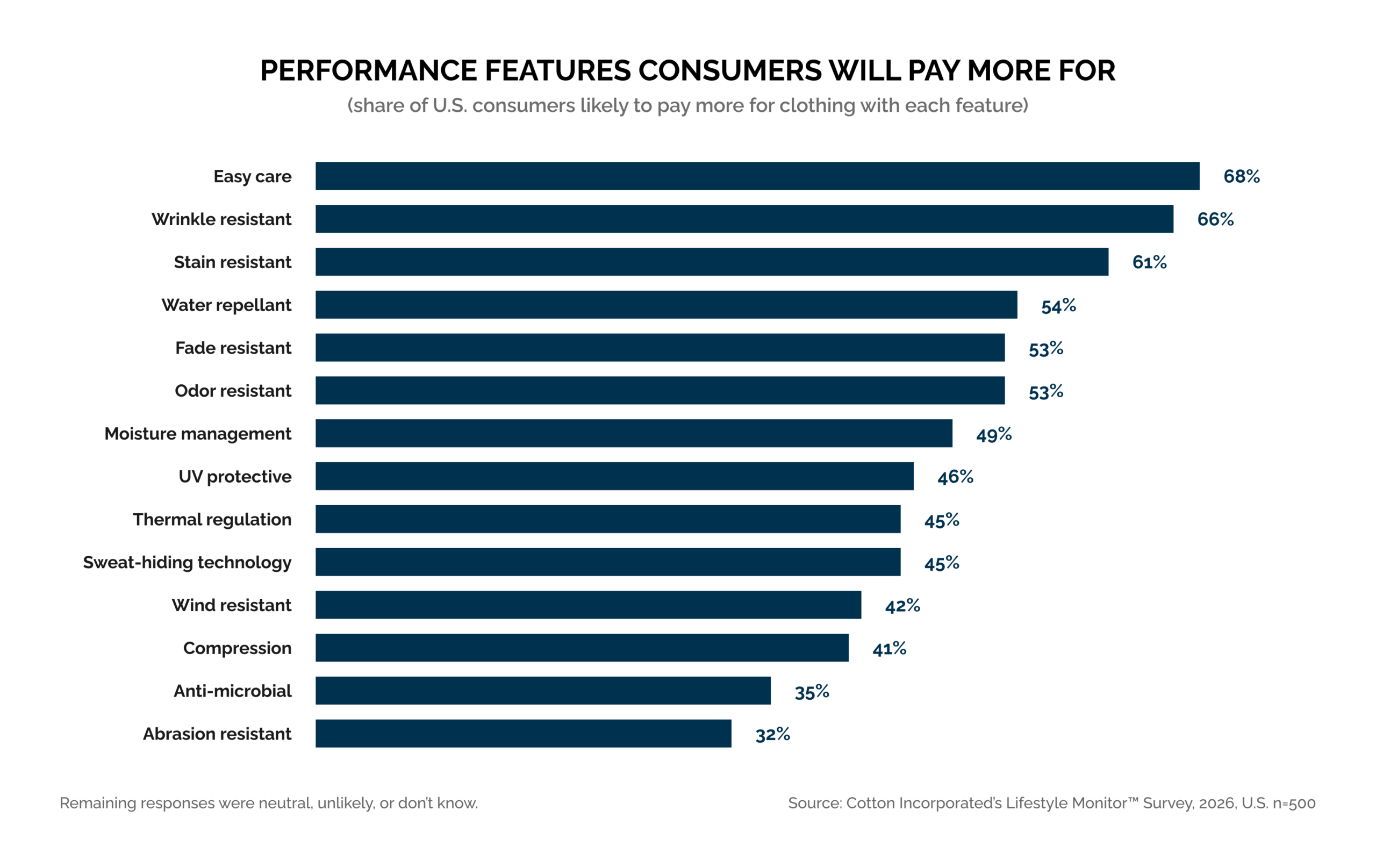
These two brands are in alignment with consumers. Research shows that consumers would pay more for apparel with various performance features. According to the Cotton Incorporated 2026 Lifestyle MonitorTM Survey of 500 respondents, U.S. consumers would pay more for a garment with stain resistance (61 percent), water repellency (54 percent), odor resistance (53 percent), moisture management (49 percent), UV protection (46 percent), thermal regulation (45 percent), sweat-hiding technology (45 percent), wind resistance (42 percent), anti-microbial technology (35 percent) and abrasion resistance (32 percent).
Besides this desire for performance-enhanced clothing, apparel makers should note that U.S. consumers also overwhelmingly prefer their most-worn clothing items be made of cotton (79 percent), according to CCI and Cotton Incorporated’s 2025 Global Lifestyle MonitorTM of 1,000 respondents. Most U.S. consumers (79 percent) consider cotton to be safe for the environment, and 70 percent are interested in sustainable clothing.
Proprietary Product Technologies
Cotton Incorporated has been working to make it easier for brands to offer sustainable cotton apparel that also provides performance features consumers seek. Cotton Incorporated’s proprietary product technologies enhance cotton’s best qualities to optimize products for specialty use cases.
For example, TransDry® technology combines the comfort and breathability of cotton with moisture wicking that rivals any competitive fiber in the performance wear market, keeping wearers cooler and drier. It also washes clean of odors and is versatile across all knit and woven product categories.
TOUGH COTTONTM technology improves the strength, durability and abrasion resistance of cotton, all while maintaining the natural comfort and breathability of cotton.
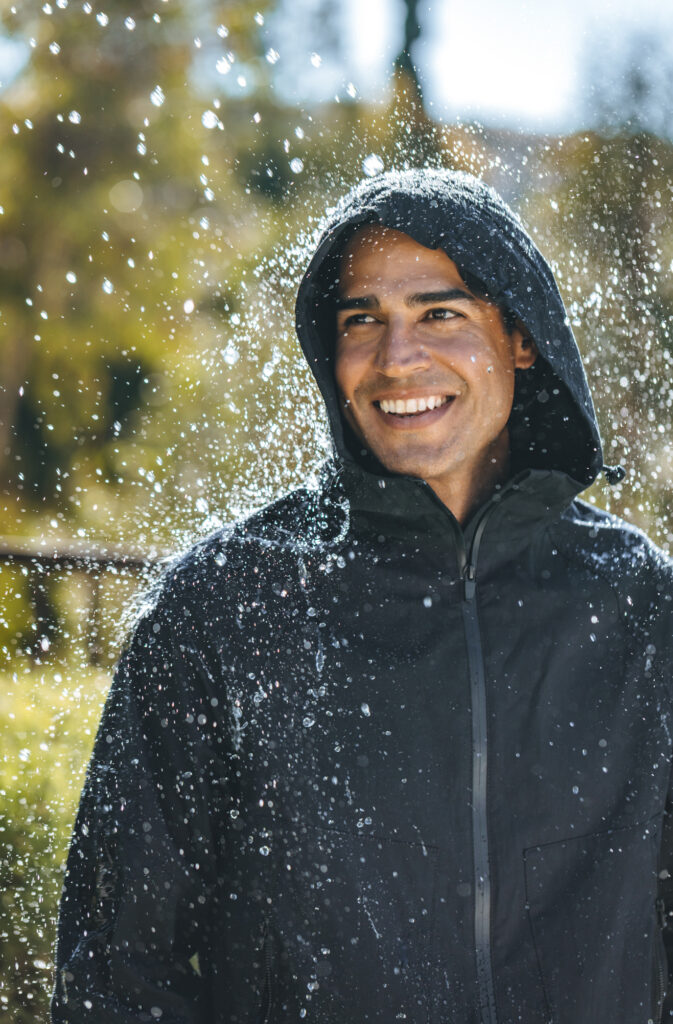
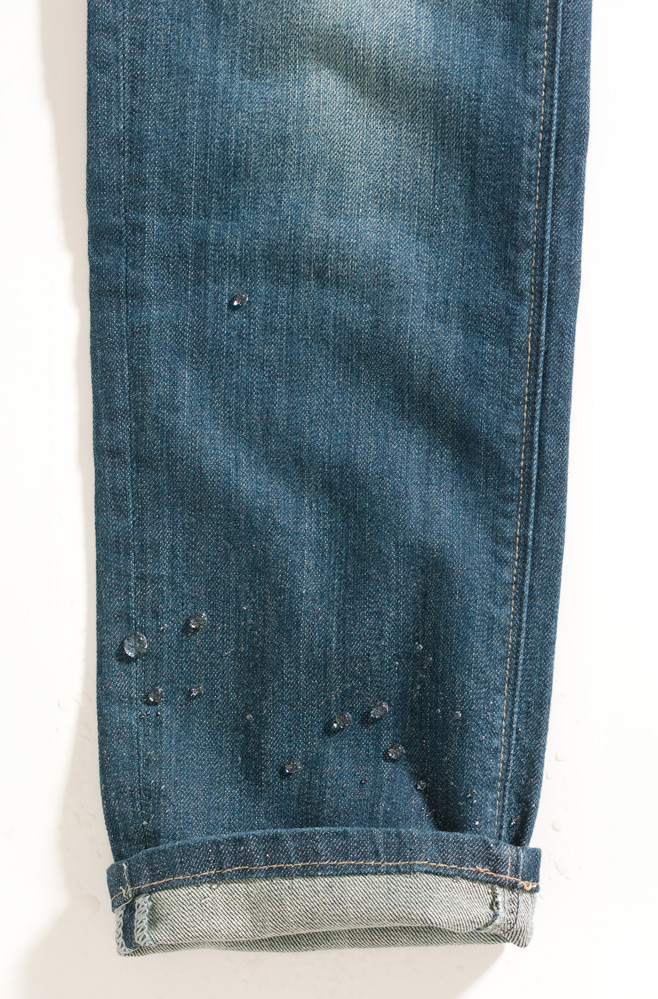
STORM COTTONTM technology is a durable water-repellent finish for any cotton garment, offering protection from both rain and snow. It can be applied in fabric or garment form to knits and wovens, including denim.
NATURAL STRETCH technology adds a comfortable, soft stretch to 100 percent cotton woven fabrics, and PUREPRESSTM is a durable press finish that provides strength, abrasion protection and wrinkle resistance to cotton professional wear – without the risks of formaldehyde.
The Natural Fiber Advantage
“I tell anyone who will listen that the industry originally defaulted to synthetics because they were cheaper, not because they performed better,” Duer’s Lenett says. He spent decades making jeans for brands like Levi’s. “The early iterations of polyester were far from breathable or stretchy.
“My 35 years working with natural fabrics gave me a strong conviction about what should sit against the skin, and it’s not plastic. Synthetics have their place in super high-intensity activity, but Duer makes clothing for the other 99 percent of our waking hours where you’re moving and need performance, but it’s not high intensity. The bottom line is cotton and other natural fibers breathe in a way synthetics simply don’t.”
Andersen says Snow Peak’s customers appreciate the brand’s apparel for its durability and timeless style.
“Each piece is designed to withstand the rigors of regular wear, while our silhouettes reflect our Japanese heritage,” Andersen said. “Unlike synthetic materials, natural fibers age gracefully, developing character and patina through years of wear. This evolution makes each piece unique to its owner and contributes to a longer life story for the garment.
“In a way, this appreciation for longevity reflects an eco-consciousness on the part of our customers. There is certainly an increased preference for natural fibers, especially with the concerted effort to move away from fabrics containing PFAS. In the activewear and performance space, more brands are returning to wool and cotton.”
The bottom line is cotton and other natural fibers breathe in a way synthetics simply don’t.
Founder, DUER Performance Apparel